Table of Content
For example, the session, "The Impact of Staff Turnover on Services to Children and Youth" presented by Freda Bernotavicz and Sandra Spencer provided an important opportunity for this audience to hear children and a parent discuss their experience with worker turnover and its effects. If the child welfare field is to be successful in providing for the safety, permanency, and well-being of children and families, then informed strategies for recruiting and maintaining a stable and highly skilled workforce must be implemented. In addition, it is critical to establish strategies for optimizing, professionalizing, and stabilizing the existing child welfare workforce. The wide variety of participants at the Institute raises the question, "Who should be involved in efforts to address workforce issues if improving the child welfare workforce is the goal?" There is a need to bring balance to research and practice. Another potential concern is that aides may have given socially desirable responses to some of the sensitive questions (e.g., those on patient abuse). However, the surveys were anonymous, and there was no evidence that certain questions were left largely unanswered.
However, self-reported hepatitis B virus vaccine rates were suboptimal; only 57 percent of participants reported that they had received all three doses, and 10 percent received only one or two doses; 2 percent reported that they had not been vaccinated, because they were HBV antibody-positive. The majority of aides reported tuberculin skin testing (i.e., PPD), with 67 percent reporting annual testing, 19 percent reporting twice-yearly testing, and only 2 percent reporting that they were never tested. Self-reported compliance with infection control measures was generally good. For example, most of the aides reported the use of gloves when the possibility of contact with blood and other bodily fluids was present. Frequent handwashing was very common , as was the use of hand gels or foams . Nearly all participants reported quickly cleaning up blood or bodily fluid spills.
About AHRQ
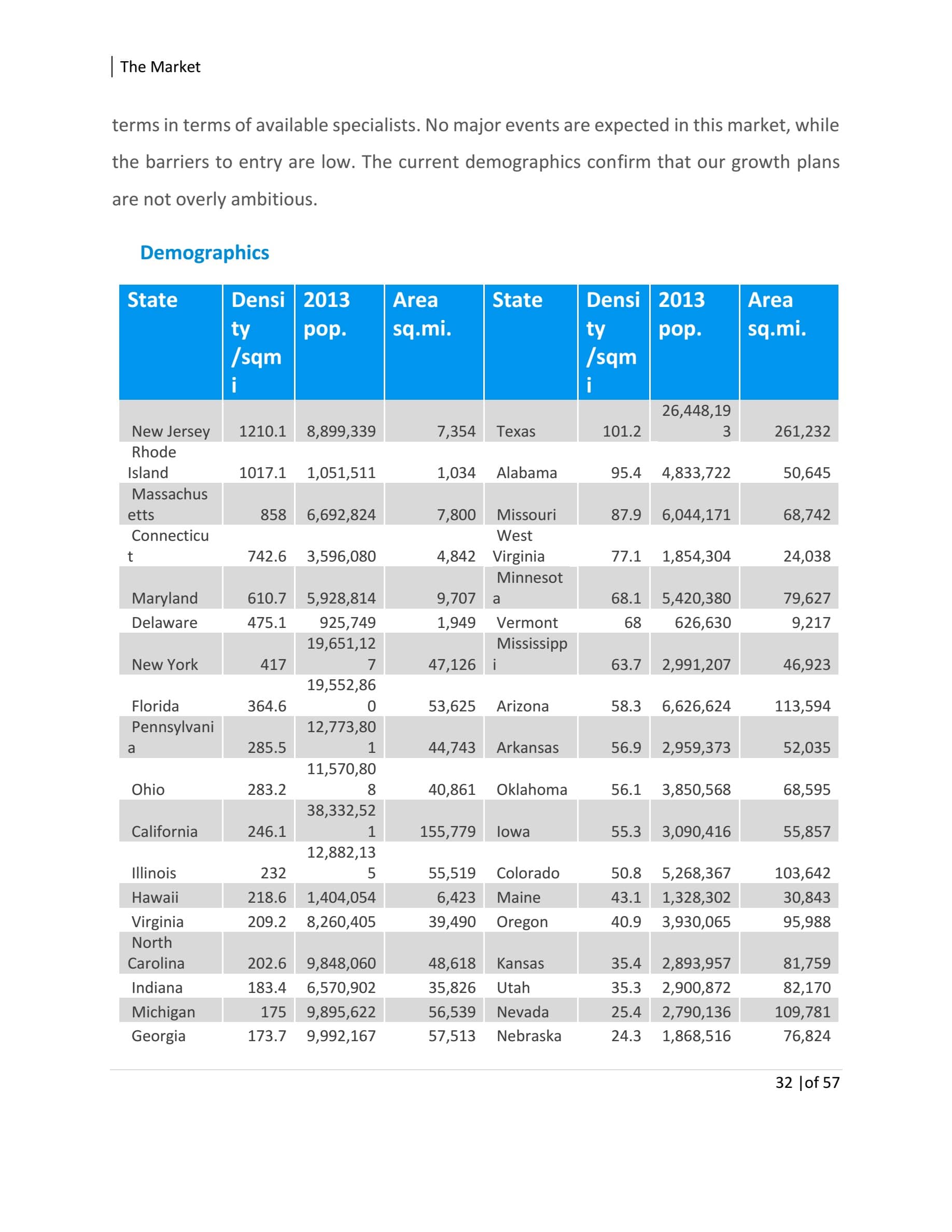
Most participants had worked in the home care sector for slightly more than 8 years, but some had worked in the field for as many as 35 years. The vast majority of the sample commuted to and from work (i.e., home visits) using public transportation, with an average daily travel time of 2.2 hours. Failing to make a new falls assessment and care plan for a resident who has fallen.

Everyone means patients and their families, consumer agents and advocates, health professionals, administrators of health plans and facilities, purchasers of health care services, and policymakers at all levels. The messages to these audiences are 1) that the quality of care can be measured and improved and 2) that quality of care should not be ignored in pursuit of cost control. Reinforcing these messages means making sure that quality of care stays on the health care-delivery agenda, with clear identification of the risks and opportunities that are posed by the changes in health care in the United States. It also means describing how health plans, health care organizations, and clinicians should be accountable to patients and society and, conversely, how individuals can take appropriate responsibility for their own health. Health Care Comes Home lays the foundation for the integration of human health factors with the design and implementation of home health care devices, technologies, and practices. The book describes ways in which the Agency for Healthcare Research and Quality , the U.S.
What are the benefits of home care?
Falls hardly ever have one single cause, but rather they require adjustments in multiple areas to prevent future falls. Study participants also discussed potential advantages to creating the funded hub of PCR as an independent agency or office within HHS. These include possibly greater ability to attract funding for PCR and autonomy to focus on a PCR agenda wider than typical HSR domains.
Health care technologies include medical devices that are used in the home as well as information technologies related to home-based health care. The four recommendations in this area concern regulating technologies for health care consumers, developing guidance on the structure and usability of health information technologies, developing guidance and standards for medical device labeling, and improving adverse event reporting systems for medical devices. The adoption of these recommendations would improve the usability and effectiveness of technology systems and devices, support users in understanding and learning to use them, and improve feedback to government and industry that could be used to further improve technology for home care. Health care is moving into the home increasingly often and involving a mixture of people, a variety of tasks, and a broad diversity of devices and technologies; it is also occurring in a range of residential environments.
Home Health Care Sector
Monitoring chronic conditions, serious illness and unstable health problems such as pneumonia, COPD and diabetes. Assistance with household chores including tasks such as dishes, vacuuming, laundry, watering plants, and meal preparation. Helps to maintain a comfortable living environment for seniors that is safe, healthy, and pleasant.

Fund an entity to address core primary care research needs and coordinate federal PCR effortsProvide targeted funding for a hub for federal PCR. RecommendationsSuggested Action StepsImprove the relevance and timeliness of HSR and PCRCreate funding mechanisms that support more rapid, engaged research approaches, such as embedded research and learning health systems models, and dissemination of their results. For informal caregivers, and provide guidance for all caregivers to work effectively with other people involved. Changing the instructions for use requires manufacturers to submit the device along with revised instructions to the FDA for another 510 premarket notification review. Since manufacturers can find these reviews complicated, time-consuming, and expensive, this requirement serves as a disincentive to appropriate revisions of instructional or training materials.
Advances in Patient Safety: New Directions and Alternative Approaches (Vol. 1: Assessment).
The health care that results varies considerably in its safety, effectiveness, and efficiency, as well as its quality and cost. A physician assistant is an integral part of a comprehensive health care team composed of supervising doctors/physicians and other providers and healthcare professionals. The study found that federal agencies engage in internal strategic planning and research prioritization processes, frequently with input from other agencies. However, no overall prioritization of HSR agendas occurs across agencies, except on a limited number of topics. At the same time, health care delivery stakeholders encouraged federal agencies to have a single agenda for HSR to ensure that priority research areas are being addressed across federal research portfolios.

CDC’s portfolio of HSR and PCR is organized around diseases, health conditions, and injuries, but focuses on prevention and health promotion spanning community and health care settings. The portfolios of other agencies tend to focus on specific health care settings or other populations (e.g., CMS on Medicare and Medicaid beneficiaries, VHA on veterans’ health care and health, and ACL on community-living elderly and disabled individuals), or research audiences (e.g., ASPE on federal policymakers). However, the breadth and complexity of HSR and PCR, and the need for research in these fields, are beyond the capacity of any single agency. Other federal agencies contribute critical equities and functions in funding HSR and PCR depending on their congressional authorizations, missions, and operational needs. NIH plays a fundamental role in the development of biomedical and clinical treatments and in testing the efficacy and effectiveness of care interventions and strategies for specific diseases, body systems, and populations. HRSA provides critical leadership in research on safety net services and the health care workforce, and ACL focuses on research to support community living of elderly and disabled individuals.
For example, such change theories, frameworks, and logic models help indicate why certain interventions may be expected to work in certain settings, explain when they work or do not work, and generate implications for generalizing results to other health care settings. The study identified the need to improve the relevance and timeliness of HSR and PCR for health care delivery stakeholders. Study participants noted that many federally funded HSR and PCR studies take a relatively long time to be approved and conducted compared to the pace of change in health care delivery systems. In addition, such research often occurs in highly controlled conditions or atypical settings that are difficult to generalize. These studies typically do not use research designs or methods suited to examining the complex dynamics of health delivery in ways to guide improvement.

Practices that could result in harm to both the caregiver and the patient were reported by most of the respondents, for example, turning and positioning, walking and ambulating the client, and transferring and lifting the client. Yet only a small proportion of respondents reported access to safe lifting devices such as Hoyer lifts and/or transfer boards . Reports of hazards that could lead to slips, trips, and falls—such as excessive clutter, loose rags, etc.—were not infrequent . Home care serves a critical role in the healthcare system by allowing patients more opportunity to make decisions about their care.
The VHA and AHRQ offer separate funding mechanisms for dissemination, and the VHA offers a mechanism for intervention studies to apply for additional funding to disseminate to other settings in the VHA system. Such funding mechanisms in these, and other agencies, should be expanded. For countless families, home health care is a fundamentally essential and critically important service that is far preferred to placing their aging, disabled, or chronically ill loved one in a hospital or nursing home setting.

Moreover, many types of impact are by their nature difficult to systematically measure. Study participants also called attention to challenges in achieving impact of HSR and PCR, including a lack of investment in high-risk studies and various disconnects between research and implementation. Using task analysis and other human factors approaches to populate the medical device database will ensure that it contains information on characteristics of the devices and implications for appropriate care recipient and device operator populations. It is the responsibility of physicians to prescribe medical devices, but in many cases little information is readily available to guide them in determining the best match between the devices available and a particular care recipient. No resource exists for medical devices, in contrast to the analogous situation in the area of assistive and rehabilitation technologies, for which annotated databases are available to assist the provider in determining the most appropriate one of several candidate devices for a given care recipient. Although specialists are apt to receive information about devices specific to the area of their practice, this is much less likely in the case of family and general practitioners, who often are responsible for selecting, recommending, or prescribing the most appropriate device for use at home.
Each recommendation addresses a key gap or other important theme from the findings. Action steps included with each recommendation represent suggestions of study participants or the RAND study team based on the analysis, as specified below. PCR has emerged as a distinct field in its own right, addressing a central component of the health care system. The U.S. Food and Drug Administration and the Office of the National Coordinator for Health Information Technology should collaborate to regulate, certify, and monitor health care applications and systems that integrate medical devices and health information technologies. As part of the certification process, the agencies should require evidence that manufacturers have followed existing accessibility and usability guidelines and have applied user-centered design and validation methods during development of the product.
Study participants reported this bias for peer-reviewed grant mechanisms, which tend to gravitate to a traditional incremental approach to science, as well as CMMI’s demonstrations, given the size and investment in the payment and delivery models being tested. To address the need for innovative research with the potential to yield breakthroughs in health care system design and change, we recommend that individual funding agencies consider the following action step. Expand funding to refine mixed qualitative and quantitative methods suited to generating evidence on the implementation of change in complex health care systems. Study participants pointed to the need to expand the use of qualitative methods, such as interviews, focus groups, and observational methods that more directly examine the context of health care delivery and the process of change in health care systems. In particular, emphasis was placed on the need to further develop and refine mixed designs that use both qualitative and quantitative methods.


No comments:
Post a Comment